Wednesday, December 5, 2012

Wreck-it Ralph Trailer Review


Saw this movie a couple weeks back, but I knew I'd be buying a ticket when my friend linked me to a trailer months before the release. Loved the movie, so I thought I'd look a little more into this trailer which sold me long ago. 

The narrative conveyed in this trailer surprised me now after giving it a second look. It opens with a voice-over, which I thought was outside of the film itself, and placed for the sake of the trailer. It soon reveals that the voice-over was actual dialogue from a scene within the film. The purpose of the voice over was to give some backstory into the film, introducing a character and his conflict. Simple as that. 


The mis en scene of the film amazed me, as I was when I saw the film. There's one shot of Game Central Station, which shows all the tiny characters walking around. Some could even be made out to be references to some popular existing games. The finer details of this shot makes it even more intriguing to watch. The depth of the shot makes the station seem almost endless, which in correlation could make the viewer assume the film itself has endless amounts of entertainment.
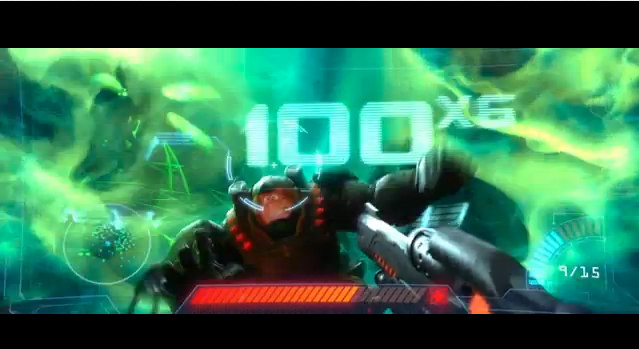

The cinematography was interesting as well, with well executed close-ups for characterization of Ralph and other main characters. I saw some quick pans that were used to transition between two shots. One part that I liked in particular was the whole first-person scene in Hero's Duty. It immerses the viewer into the game with a standard first-person shooter display. The viewer sees much of the action, with little comedic parts of Ralph running around for his life.

For the edit of this trailer, I realized the use of titles was effective to moving along the trailer narrative. Although there was no signature "movie trailer voice", you could already hear it in the back of your head anyway. The pacing of the shots increased when "Some Nights" by Fun. started playing. It was if the trailer provided coverage of the film's story line, while also building on the characterization of Ralph.


Speaking of soundtrack, the sound design of the trailer was significant as well. First off, the trailer is made of dialogue taken from the film itself, there was no external voice-overs or anything like that. It was the choice of dialogue that made an impact on the trailer. Each section of dialogue further characterized whomever spoke it. As we got deeper into the trailer, the dialogue became more revealing and left you with just enough knowledge about the film to understand it, yet not enough to want to know more. Then near the end, the soundtrack led to an increase in shot pacing, and made it feel almost like a montage of content. The choice of music was interesting and represented that "wanting to be someone else" kind of feeling. 

Wednesday, November 28, 2012

Documentary Pitch

Purpose: make people aware of a SF-run organization named “United Playaz” and how it reaches to troubled youth in order to strengthen their self-confidence and also strives to teach young adults how to make smart decisions in violent situations.

Contacts:
Misha Olivas - (415) 573-5138
main building - (888) 975-2929
misha@unitedplayaz.org
Rudy Corpus - (415) 573 6219

Interview Questions:
workers/leaders/supervisors:
Can you tell us about yourself?
Where is United Playaz located? (background of neighborhood filled with deliquants)  
What is United Playaz and what does it offer in terms of opportunities/aid to kids?
What inspired you to join/be a part of United Playaz? (what are your contributions?)
What is your role in running United Playaz?
How has United Playaz changed people’s lives? Has it changed you?
What do you have to say about children going through rough times right now?
Personal stories you’d like to share?

***ask to take us around places of the building/streets. showcasing historical significance or location of some of the areas.
--------------------------------------------------------------------------------------------------------

teens/adults/parents:
History of life before outreach programs such as United Playaz?
What does United Playaz mean to you?
What have the people here done for you?

How does it affect the community? Are you glad United Playaz exists?


Shot List- What images do I need to make the visual part of the story work? Interviews use mostly Close-ups, Waist shots, and B-roll. Background should also be considered. Usually at least 5 to 10 different shots are combined for a sophisticated piece.

Interviews - MCU/CU/MS (depending on space)
Opening:
LS of cars
ELS of citizens
LS Crane/Tilt-Pan of United Playaz building
Handheld walkthrough of building (sped up)


B-Roll
LS Kids playing around or whatever
MS Workers interacting with children/at desk
CU of back of t-shirt “It takes the hood to save the hood”


General Flow:
beginning - shots of streets of San Francisco. Police Cars. Homeless. Stores. Streets with Graffiti. Cars buzzing by and children waiting or standing on the block. Voice-over of one of the employees explaining where United Playaz is located. Explaining the crime and bad influences of the city life on people. Hip-hop track? Then transition to what UP strives for and goals. Middle - interviews with UP employees/kids.
Shots of the places around the SF including inside of UP.

personal tour of the streets along with one of the creators of UP.
B-ROLL.
Ending - The main director of the group speaking positively about their work towards improving the lives of children. Personal statement that is inspiring and motivational. Ending shot of the crew helping children or just them having fun with the children, or a child holding up a sign of United Playaz. Oh or maybe a still positioned camera that switches between all the individuals who are in UP. ideasideasideas.
Scripts: This is the written portion of your piece that is included either for the broadcast script or for a voice over that pulls the different interviews together.

Intro: (voice over) short spiel over how rugged and how looming the streets of SF can be. talk about the influence of gangs and police activity in the street and how United Playaz is stationed. desired to help the youth and prevent a life of wrong choices.
Closing: (voice over) over all the shots of UP workers helping people or forming strong relationships with one another and their guests.


Monday, November 26, 2012

Known Universe: Alien Contact - Review


Known Universe: Alien Contact

Aliens. A question that has been among the minds of many for many years. Are we alone? Does alien life really exist within our galaxy? This documentary effectively demonstrates the possibilities of discovering alien life and the efforts mankind has taken to make it happen. 

This material within this National Geographic documentary was used effectively to attract and interest the audience. After a quick display of flashy b-roll, this documentary starts with a voice-over that introduces the audience to a narrator. This voice-over uses a hook to attract the audience, while also providing a bit of backstory to the purpose of the documentary. The narrator proposes the question about whether we are alone or not in space. It even samples a bit of the interview, and this sampling hooks the audience, as they are curious to know the responses from a scientist's perspective.

For the interviews themselves, they seemed a bit cliche, but well executed nonetheless. Interviews in this documentary were filmed at a standard medium shot from the waist up. Nothing too fancy or artsy, but the visual attraction came from the background, not the interviewees. The background of most of the interview pieces comprised of either still frames or animated images of something relevant to what is being said. On other interview pieces the background consists of a static yet convoluted setup of scientific gear and gadgets. This vague confusing scientific equipment catches the viewers eye and interests them.


Although visuals are interesting, the sound design in the documentary deserves much credit as well. As I watched this myself, I noticed that the volume of the soundtrack increased as the narrator was making summaries of his final points. This happens right before the documentary goes to a commercial break, and then brings up a new point when resuming. 

As for the soundtrack itself, I found it entirely fascinating. The score is comprised of fast-paced, epic, and adrenaline-pumping drum beats, accompanied by a smooth, slowly rising orchestral section. As ironic as it sounds, it works well. See 28:00 for reference. This type of music is used when either summarizing a point or introducing a new one. This method typically keeps the viewer interested as the narrator finalizes an idea and proceeds onto a new one. As for what goes in between these pieces, the sound takes a kind of subtle, eerie tone, when describing the vague unknowns of life in space. The score accompanying this documentary was definitely outstanding.

Outside of the voice-overs and interviews, the documentary takes the interview even further, by placing the audience in an actual situation. For example, when the documentary introduces the vertical gun, instead of giving an interview about the experiment and supplying animated still images or small video clips of the test, the filmmaker goes on-site and records almost all instances in where the experiment is being executed. He films the setup of the gun, the reactions of the scientists, and even the moment of truth when the bullet hits the sand. This sort of interaction is what makes a documentary a good documentary, and that it makes good efforts to keep the viewer interested and amazed.


Overall, I was certainly interested in this documentary and it definitely did not disappoint. Being past midnight, I amazingly found myself still awake at the end of the documentary. The visuals were astounding, and it even managed to make still-frame images look amazing. The interviews were great, very coherent. The score was simply fantastic and the design on the placement and manipulation of audio was definitely captivating. Lastly, there was much viewer interaction with the documentary, which kept me intrigued throughout the entire documentary. It's great, 5/5

Tuesday, October 9, 2012

"The Man With a Movie Camera" VS "Bicycle Thief"

"The Man With a Movie Camera" VS "Bicycle Thief"
Comparing and Contrasting the elements of Realism VS Formalism

Compare
Realism and Formalism were both revolutionary film editing styles in their time. However being both revolutionary, there is little to compare between the two. Bazin states that film should encompass a wide variety of perspectives and forms of story telling. These two films were criticized for using such strange concepts of editing. They both utilized more of an open ended method to convey story. Most of it was based on the audience's perception of the film and how they saw the story being portrayed.

Contrasting
The Man With a Movie Camera
This formalist film is definitely on the other side of the spectrum from Bicycle Thief. The Man With a Movie Camera had quick cuts, no more than 1-2 seconds, and used a lot of juxtaposition of shots for the audience to formulate their own meaning behind the film. At first we'd see the life of rich aristocrats, then the following shot would be of a man stuck in poverty and starvation. This deep purpose behind this form of editing is that each shot would convey a different point on its own, and would compile to a deeper, more common meaning in the film as a whole. This compilation of contrasting ideas to formulate a common theme is what portrays Formalism as a crazy and chaotic form of editing.

Bicycle Thief
This film was evidently leaning toward the side of Realism, for it had long-lasting shots that had very emotional impacts on the viewer. We see long shots of this man, and then of a boy on a curb. The audience can infer that the boy is his son, through the parental feeling or vibe that the man gives off. We see very effective use of the Kuleshov effect. We see the man's face, a large collection of bikes, his son, bikers, and through this the audience can deduct that he's uncomfortable and torn between setting a good example for his son and his intense urge of stealing a bicycle. This film could be classified as realism in the sense that it is filmed and edited in a vary realistic and natural sense. The cuts are used to show a change in action or emotion and it flows so well with the film that the audience accepts it as normal. There were no surprises in the cuts, unlike in The Man With a Movie Camera.

Thursday, October 4, 2012

Realism, Classicism, and Formalism in "Destiny"


Destiny
(click the picture!)

Realism
I found the beginning incorporated some aspects of realism. The film opens with a man's daily morning routine, and it seems awfully bland. We see much of this scene being bland and a bit uncomfortable. With these long, realist shots, the audience develops a weird unattractive feeling towards the man's collection of clocks. The beginning stair scene could potentially disturb a person. We could also see how passionate and precise this man is towards his clocks as we take a good several seconds to observe him synchronizing
the clock that is swinging on the wrong side.

Classicism
What stood out to me in this film was that the different editing styles almost progressed in an order, which I will point out soon. Classicism is evident when the plot is thrown into disequilibrium with the man noticing his mourning routing being replayed in front of him. Rather than an awkward series of long cut shots, the shot duration is cut by a few seconds. Evidently there are also more close-ups and angle usage compared to the man's first "life".  

Formalism
By the third life, the man realizes that his time is getting shorter and shorter and needs to act fast. This cause for action evokes more association cuts and abstract shot selections. For example, when he wakes up for the first time, the shots are really quick, and are comprised of mainly reaction shots between the man and his clock. Another instance of formalism is when the alarm clock hits the wall clock, the swinging clock hand comes to a halt in a large close up. 

Monday, October 1, 2012

Step Outline for ________


Insert Title Here:


ACT ONE
Boy is seen in the middle of a girl’s room with a letter in his hand, beginning to worry. Doorknob begins to turn and boy frantically looks around the room.
Establishes our main character.
Conflict is currently unknown.

Current goal is that he needs to hide. Fast.
A girl enters the room and the boy is nowhere to be seen. A shift in angle reveals that he is hiding under the bed.Boy is in quite a pickle. The obstacle is that he must escape the girl’s room, yet right now it seems impossible.
He holds the letter in his hand and flashes back to when he wrote the letter in his room. Time is manipulated through flashback
Begins to reveal backstory behind the character’s current situation
Letter turns out to be a love letter meant for a girl. Boy shoves letter in folder, tossing it away saying “Ugh, it’s hopeless.”Backstory is further established, revealing he’s in the room because of the love letter. Also characterizes the boy as unconfident and possibly shy.
Flash forward into the middle of history class.
Boy glances at the girl a couple rows away, but gets scared as she hair-flips, thinking she might see him watching her. He awkwardly continues scribbling in his notes
More characterization on the boy. It has become clear that this girl is the love-interest.
Character is definitely shy, as he quickly looks away as she flips her hair. Also shows that he is awkward.
After class she asks the boy for his notes, for she was absent last week. Boy is shocked that she spoke to him. He stutters a response and clumsily reaches into his bag, grabbing the letter on accident as well. Girl laughs and thanks him.Highlights the boy’s “love from afar” relationship with this girl. Further characterization on the boy’s awkward and shy nature. The girl’s laugh suggests they’re not distant strangers, but more so distant friends.
The boy is back home, and his room is a mess. He can’t find the letter, and is caught thinking hard until he realizes he accidentally handed it to the girl. Boy falls on his bed. “I’m so screwed.”Shows how afraid and nervous the boy is about the letter he wrote. Doesn’t want the girl to read it, but also wants to let her know how she feels. Boy is too embarrassed to let her read it.
ACT TWO
Boy asks her if she looked at his notes, and the girl replies that she hasn’t looked at them yet and she left them at home. The boy is relieved. When asked “why?” the boy denies everything.
Boy is temporarily relieved, but knows that he must think of something to stop her from reading it.

The boy is approaching a house with no cars parked in front (which we assume to be the girl’s house) and hops the fence to get in through the window. Amusing that the boy goes to extremes (which is not like his character) to retrieve this letter. The lack of vehicles propose that nobody’s home.
The boy ends up in the girl’s room, and the same beginning sequence is repeated.The manipulation of time finally answers the questions that the audience had from the beginning of the film. The audience discovers that the beginning of the film is this current scene, but with more backstory, the scene is clear. The boy’s goal is to retrieve the letter, and the current setting is the girl’s home.
The boy is hiding under the bed and we see a t-shirt/bra drop to the floor. Boy has a shocked, widened expression.Boy is put in a situation where he doesn’t know what to do. He’s pushed near his limits of nervousness and an uncomfortable mood is established.
It turns out that the girl is just surfing through her drawers to find the notes that the boy had took. She then leaves the room to keep searching.This scene consists of dramatic irony that it’s almost amusing to the audience. The boy believes that the girl’s changing, yet the audience knows it’s not that serious. The girl leaving provides a chance for the boy to escape.
The girl continues looking in the kitchen/living-room for the notes. The boy is seen sneaking around corners, trying to escapeYet another obstacle in the boy’s path. His current and final goal is to get out safely and unnoticed.
The boy turns a corner and she is blocking the door. He notices she’s looking for the notes, and as a last-resort, he crumples up the history notes and tosses them across the room, hoping she would notice.Establishes the boy’s one shot at success. If he can pull this off and leave, then he is home free.
ACT THREE
She walks over to pick it up. The girl is definitely confused and turns around to survey the surroundings. The boy isn’t seen, and we see him running down the street.
The boy has escaped safely and his goal was achieved.
The next day, the girl returns the notes, apologizing for the crumpled mess. The boy accepts it awkwardly, like always. The two then part ways as school ends.The boy knows he’s safe and she didn’t see the letter. However, the boy is a bit discontent that he’ll never get to show her his feelings. The audience feels sympathy for the boy.


Monday, September 24, 2012

Characterization of a 5-Tailed Fox


Characterization of a 5-Tailed Fox

Recently I watched a cute animated film called Yobi, the Five-Tailed Fox. The star of this film is Yobi, a mystical 5-tailed fox that can transform and alter her appearance as she pleases. With this power, she tries to become close friends with a few humans in a nearby delinquent camp for students. She does this by transforming into a human and enrolling in this camp. However, in befriending a human, Yobi has the ability to capture their soul and fully become a human if she wishes. A device given to her by a shady "detective" tricks her into stealing her friend's soul and Yobi adventures to great lengths to get that soul back.


Yobi is seen here in teenage girl form. Technically she is a fox that is hundreds of years old, but she takes the form of a teenage girl to communicate with the humans. She sports short shorts and a loose tank top. Sometimes she plays the role of her own mother to enroll in the camp. Here she is seen looking into a mirror where we see a fox, her true form. Yobi is generally a shy, yet energetic individual. She enjoys the life of a human, yet if she expresses too much emotion, her tail shows and has to hide it.


Full Movie:

Starting at 1:07:20 is the scene I will portray in this blog post. Up until now Geum-ie has been hiding his real feelings for Yobi, and he begins to feel love and compassion for Yobi. This causes his soul to turn blue, causing the device to almost steal the soul. Instead the fox hunter stops Yobi, and Geum-ie saves her from the fox hunter. Geum-ie then falls into a lake that leads into some kind of "spirit-world" in which souls escape to. Yobi, believing this is unjust, follows Geum-ie herself and tries to get him back. An obstacle she faces is when leaving the spirit-world to return Geum-ie to life, his soul's place is already set, and cannot leave without replacement. As a result, Yobi offers her own soul and is forced to stay behind in the spirit-world. This feat itself is a great display of character, as she gives up her dreams of being with the humans in order to let this boy gain his life back. Yobi's love for Geum-ie causes her to give up her own life for his happiness.