Thursday, February 16, 2012

Oral Presentation part 2 and 3


II. Historical and Institutional Factors-

  1. What are the institutional factors that may be important?
    1. as a production of a specific producer (i.e. Walt Disney), institution (Disney Studios), specific economic factors (Studio Film), or a political background? (U.S. politics 1959)
  2. What is the film’s historical significance?
    1. as a document of its time?
    2. as a part of history of film?

III.  Socio-cultural context

  1. What is the film’s socio-cultural context?
    1. as a work from a specific country?
    2. As a work from a specific culture?
    3. As a work representing a specific part of its society?
    4. As a work made for a specific audience?
    5. As a work made for a specific reason?

II. Historical and Institutional Factors-

1. Institutional factors of importance could possibly include the studio works of DreamWorks and Paramount Pictures. Having Spielberg as a director, these two were very inclined to present them with a large budget, knowing that Spielberg wouldn't disappoint in making this movie successful. This allowed him to film in grand settings across  Europe. He also didn't have to cut back in having top notch effects for realistic battle scenes.

2. The historical significance of this film represents America and its involvement with other countries concerning war. The film represents that of World War II, which was a great historical moment for America. However, the film was being produced in '99, and this was around the time in which tensions increased that led to the War in Afghanistan in 2001. Spielberg directed this film to act as a message to society and wake up the world about the brutality in war, and how we're sending in men that will never be the same if they make it out of the war.

III. Socio-cultural context

The socio-cultural context of this film surrounds a patriotic American war film, but has its anti-war messages as well. This film represents society through the use of innocent individuals as the troop that we could easily relate with. They are represent all the individuals that our country sends to war, and how war itself heavily affects the individual's emotion and mindset. The reason for this film is to awaken our society of the brutality of war, and that although we have national pride, the effects war has on the individual is too overbearing for one to take. No man can enter war and come out as the same man. Being in war causes great emotional struggle for each individual as they learn to form the warrior within them.

Oral Presentation part 4

Use the guiding questions below to focus your attention on the narrative structure of your film.
Please make sure to choose your 5 minute extract when you approach this section.
KEY Details to include:
1. What was you rationale for choosing this selection?
2. How does the extract relate to the film as a whole?
3. How is this film constructed according to narrative/story being told?
4. Is the narrative organized by plot or time sequence,character driven vs. plot driven?
5. Does the film use other principles than narrative sequence as a structure (for instance, an argument?
6.What is the nature of our engagement with the story or characters?
Analysis to include: character, plot, setting, theme, style, genre, narrator etc...
Use the link and chart on narrative to help organize your thoughts:


1. I chose the last battle scene of this film, which is the battle on the bridge of Ramelle, over the Merderet river. I chose this because this being the climax of the film, also serves as the resolution, where all conflicts and themes pull themselves together to lead toward the ending.

2. Being the climax or resolution of the film, this scene relates to the film as a whole by tying together all the underlying themes of the film. One theme highlighting the importance of an individual in war or situations like it. We see where Miller’s efforts led the team in finding Pvt. Ryan, and the significance he has in representing all individuals of this era. Although the movie focuses on saving this man, Spielberg doesn’t stop short of making every individual important within the movie. He even goes to highlight one of the men on the German side, that being “Steamboat Willie”. Showing how he comes back to fight for the Wehrmacht in this scene, after being released by Miller’s squad before, shows how he only serves his country and is only an individual wanting to do his task to survive.

3. This film is told through a standard 3-act narrative structure. Although the opening scene seems to be very climactic in terms of pace and action, this scene only helps set the problem in motion, as we see both of Private Ryan’s brother being KIA. The conflict begins when Miller gets the memo that his squad has been given the task of finding Pvt. Ryan, highlighting the obstacles they overcome.

4. The narratives are organized by plot, for the events connect to each other. Considering the film is a large search for one soldier, the squad goes about searching each station, getting tips and clues from the last station leading to the next, getting them closer to Ryan. One could argue that this film is more plot driven rather than character driven; however I believe this film is character driven when we juxtapose soldiers Upham, Rieben, Miller, and Ryan. They all (except Miller) survive and we see an evident change in character in all of them. Ryan understands his purpose for fighting, and serving his country. Miller understands the value of individuality when he’s seen his other troop members die before him. Rieben also understands why staying on the mission was worth risking their lives, for everyone deserves a chance to go home. Upham helps Spielberg highlight the brutality of war, from when we see him sobbing on the stairs to killing Steamboat Willie at the end of the battle of Rammel.

5. Although our narrative is mainly character driven, it doesn’t always go down the expected path. For example, an argument arouses during an evident change in Rieben. He begins to contemplate whether the loss of lives is worth saving one private. This causes an internal conflict within all the characters. When pushed this far, we can see the evident brutality that war places on the individual.

6. The nature of our engagement is that we learn to honor each man as a loyal and courageous to the extent that we don’t see them as normal humans anymore. They are heroes, servants of war, and the greatest human beings known to man. They all have the traits of a perfect role model and we look up to them, but as their deaths come one by one, the connection that we thought we had to them had been lost. These noble heroes are just another casualty of war, which leads us to realize the impact that war has on the individuals.

Oral Presentation 5

The characters in this film represent the individuals serving in war, and with each soldier we can emphasize the effects war has on each of them. This connects to the issue of brutality of war, and how our country just willingly sends young troops into wars, yet rarely considers their emotional struggle and change they undergo when in war. This is best shown through Upham, who turns from an innocent assistant boy into a man that gains a purpose to kill a man he once knew and bonded with.

The style of acting portrayed in this film contains standard or archetypal roles you would see in any war film. There is the standard “badass” who goes by his own rules, yet is always under the order of the squad leader. We have the loyalist soldier that would do what has to be done in order to fulfill the mission, although he has the personal conflict against doing violent actions in the first place. However, Spielberg also breaks these roles to highlight individuality, and there is no standard type of person. He makes our rebellious soldier the one that has a sweet spot for children and family. We see Vin Diesel saving the french man’s daughter. For our loyalist, normally we’d find him being the innocent Christian that has religious reasons against violence. In this film, we have our loyalist being a Jewish man that always cracks jokes about Germans.

Spielberg incorporates many shots with great depth, including foreground, middleground, and background. However although this is an action packed scene, Spielberg manages to compile close ups to emphasize characterization of each individual. The movement of the camera in each shot is either very emphasized by freehand movement, or steady shots during dramatic events. The meaning constructed through these techniques highlights the brutality of war, and causes the audience to come to realization of the horrors that we send our troops to.

In terms of proxemics, Spielberg allows us to get really close to each troop member. There is one scene in which they each talk about their family and personal life, making the audience feel as if we were personal acquaintances. This makes us relate to the troops in order to realize their individualism so their deaths will have a greater impact on the audience in realizing the destruction and harm war can do.

The editing in this scene incorporates fast paced shots, being an action scene. During scenes of pure bloodshed and destruction, the editor incorporates enough time for the scene to impact the viewer. The shot duration of these shots take around half a second to two seconds.

As the scene progresses on, we see a subtle change in lighting in color, as the shots tend to lose color and fade to a dull grey color scheme. The lighting becomes less evident, symbolizing a decreasing level of hope for survival. However, when we see the airplane bombers overhead and the troops coming over the mountain, the scene beings to flourish with color and light. When we see Ryan holding Captain Miller, the light across their face becomes more evident, and there are less shadows, symbolizing that their ordeals are over.

Spielberg purposely omits music from the battle scene to dramatize the lack of hope for their troop. Instead Spielberg focuses on the sounds of warfare, that being the gunshots, explosions, knife battles, and shouts. This allows the audio to add to the impact of realization from brutality of war.

The setting of this scene places us in a half destroyed small french town. The design of the landscape already highlights the destruction of war and its impact on citizens. Buildings that were once homes had been turned into war forts.

A reoccurring symbol in Saving Private Ryan is when we see Miller’s hand shaking or when he is affected by shell shock during battle. The symbolic meaning behind this is that men’s loyalty and courage for serving in war is one to be praised. Normally, shell shock would send one home from war. However, Captain Miller hid this from the officials and stayed in war for his troops. His squad was the only one that knew, but they let him be for they saw him as a true hero.

The emotional information being conveyed is that of the effect of war on the individual. We can see how each soldier changes from when they first arrived. The most dramatic in this scene is the characteristic change of Upham. Once a soldier crying and breaking down on the steps of his friend’s death site, changed to a man shooting down a German he once knew very well. His dramatic uprising against the German troop signifies that once a man enters war, there’s a low chance that he will emerge the same. We also see private Ryan, who was once noble about defending his post and never leaving his fellow soldiers, ended up in a feeble position, grasping his knees and shouting out to the heavens.

Sunday, February 12, 2012

1. Genre and Audience - Saving Private Ryan


I. Genre and Audience-

  1. What tradition or genre is it in?
  2. What are the features determining genre?
  3. What other work might it be connected to?
  4. Who made this? Why?
  5. What can we tell about its’ creators?
  6. How does it fit within the director’s other work?
    1. Does it share significant narrative or thematic concerns?
    2. Does it share particular visual or technical elements?
  7. What is the film’s theme?
  8. What is the target audience? How does it address its audience?


1. The genre of this piece is a traditional war film. A war film simply involves war, action, and bloodshed. This film is modeled around the events at World War II, giving us an inside look at what happens to the individual, rather than how the countries as a whole are affected.

2. Certain features determining this film as a war film include its use of common narrative techniques in war films. Narrative techniques of a war film consist of three factors: Squad proficiencies, foreign troop, and the miraculous “cavalry over the hill” scene. In war films, we are presented with a troop or squad, and the audience is always able to identify each soldier by their weapon preference or proficiency. For example, we may not know an individuals name, but know them instead as the “sniper” or “heavy weapons expert.” In every troop, there is always a noticeable soldier of a different ethnicity. In Saving Private Ryan, we have the Jewish troop serving in WWII. Most often the audience sees characters like this as comic relief. Lastly, many war films include the dramatic “cavalry over the hill” scene. This is, in times of peril, where it seems all hope has been lost, there will be the miraculous reinforcements that seem to come in at the last possible minute. During the climactic battle on the bridge in the movie, Capt. Miller is seen firing at the tank with his pistol, having lost all hope. On his last bullet, the tank explodes and we see a group of fighter jets fly overhead, and more troops and armor arrive over the hill to save the day.

3. Within the same year this film was released, another identical movie known as “Thin Red Line” was also released. These two war movies focused around the events of WWII and also signify the bravery and heroism an individual has to take in order to serve in the war.

4. Steven Spielberg was the director of this film and he holds the role as the “auteur” to this film. He’s well known for this movie amongst the many other films he’s produced and directed. He directed this movie because people know Spielberg as one to highlight themes or values that relate to the audience on a deep meaning. For example, Spielberg had also directed “Schindler’s List” which also took place during the WWII era. In this film, he highlights how the individual is affected during times of war. He also signifies the value of an individual in “Saving Private Ryan” as well.

5. The creators of this film wanted to show both sides of war, that being the effect it has on countries, but also the individual troops themselves. As i stated earlier, Spielberg highlights the individual, and their own individual motives and reasons for going to war. The creators are concerned about getting these messages to the public, knowing that people always fight for a cause. The troops we send are people, not expendable machines or robots.

6. When Spielberg directs a film, he always manages to get the theme across well and leave an impact on the audience. The audience almost always receives the take-home message of the films he’s directed. For example, Spielberg also directed “Schindler’s List” which also happened to have a thematic concern on the values of the individual.

7. Saving Private Ryan is a film about the significance of the individual. This being that an individuals actions always rely on an underlying motive or reason. One line from the film stated by Captain Miller, “You see, when... when you end up killing one your men, you see, you tell yourself it happened so you could save the lives of two or three or ten others.” This shows although they seem to be heartless killing monsters to some people, he does it for the safety of his people and country.

8. This film was directed towards Americans, being a war film told from the American perspective of WWII. This audience had to include people with some historical knowledge of the period, probably adult men with an interest in action-war films. This film addresses the audience by including a few battle scenes in this film. For example, several minutes into the film, it opens with a dramatic representation of the historical battle for Normandy.

Monday, January 23, 2012

Ideology in Film


What is ideology and how can it be implicit vs. explicit?

Ideology is a term that refers to the messages and values that a piece of media tries to communicate to the viewer. Explicit ideology is the definite message that a director/producer/writer demands to be communicated to the audience. Implicit ideology is a looser, and more debatable form of ideology. It's an ideology that can be gathered through analysis and argument.


Ideology and Expectations;Give an example of an a actor that presents a predictable ideological package that studios are quick to use. List as many of their film roles as possible – noting the particular actions/dialogues associated with the character that they play. Make a list of the five adjectives that you think best capture their typical role. Produce a detailed description of what you think their next role will be like.

Charlton Heston
Ben Hur - Ben Hur
The Ten Commandments - Moses
Antony and Cleopatra - Mark Antony
Leading, Adventurous, Courageous, Honorable, Influential
If he were to star in one more movie, he would probably play a mature man. He would be a typical role model, and possibly support the ideology of doing more for others than yourself

Personal Ideologies and the Enjoyment of Film: Think of a film that you enjoy and know well. Consider which characters you like. Analyze your favorite character using these useful questions to bear in mind when considering ideology are:
  • What is it that you like about them and what has the filmmaker done to encourage you to feel this way? 
  • What values am I being asked to share or reject? 
  • How are my feelings being manipulated to prefer one viewpoint over another? (Camera placement/movement and editing are particularly important here.) 
  • Why might a filmmaker want me to prefer one viewpoint to another? 
  • What are the artistic/financial consequences of filmmakers trying to predict what an audience might approve/disapprove of? 
  • What are the artistic/financial consequences of filmmakers trying to predict what a film's financier might approve/disapprove of?
Boondock Saints - Connor MacManus (Sean Patrick Flanery)

Connor and his brother were motivated to 'clean up the city' of all the silly mafia gang scum. I admire how they stick up for their morals and values even after given so much power and recognition. When making a hit , they stick with their Irish traditions, place pennies on the eyes of the dead, recite their family prayer, and pay their respects by visiting church afterwards. Debatable values of his actions include, family pride and value of friendship. Editing techniques help manipulate my viewpoint in certain cases. The editor uses slow paced shots when a value is being conflicted or reinforced. For example, during the battle scenes it's mainly fast match-action cuts/montage, but when that's over and they pay respects, the pacing slows down.

Changing Ideologies: Why would the ideologies of a given era or time period change the way a narrative is presented to its audience? Can you give an example of a film narrative that has changed over generations?


Ideologies change in accordance to society of the time. Depending on what the audience wants to see, what they will interpret and learn from the film will change. When ideology changes, interpretation of certain films will change. For example, in southeastern Asia, certain films had censored their government and military involvement in their own countries and other countries in their films. Over time, these governments soon grew to become a topic of interest for some films.


Ideology and the "Effects" Debate: Do you feel that films can affect you and your behavior without being conscience of it? 

Widespread and common ideologies can subliminally affect our own behavior and beliefs. Films tend to show the general content of examples when pertaining to a common ideology. For example, one can relate to a certain film when they themselves have been put in a similar situation. Films can help determine our perspective of 'common sense' and our ability to 'know right from wrong' by depicting these situations and having our protagonists values nobly reflect what should be done.

Ideology and Realism:Define Suspension of disbelief and give an example from a recent film you have watched.

Suspension of disbelief is a term used to explain how an audience accepts certain aspects of cinema that seem to go against reality. Ideology plays a role in this by determining whether breaking reality is acceptable when portraying a certain ideologies. For example, in science fiction films, there is normally very little knowledge on whether half of the scenes we see would be possible in the real world. The reason people don't critique the possibilities is because the film has to stay within the rules for films of the sci-fi genre. Like in Star Trek, Star Wars, and other space films, intergalactic travel isn't highly likely around our day and age. This is also covered by having these films set tons of years into the future, allowing imaginations to roam and explore the possibilities of the future.

Ideology & ownership: Does the financial support of a film or the ownership of a production company influence the ideology represented in a film? Explain with an example.

Financial support does give a movie its potential. High budget movies are expected to be 'the next big thing' out of cinema, or at the very least please their audience. However, spreading ideology is determined by the company itself providing the funding. Becoming well known and having more popularity would mean portraying the ideology behind their film with great success. So funding can cause bias in which way the ideology leans toward. For example, if one's going to advertise their film so widely and successfully, they'd want many audiences to accept it. For it to be accepted, it must appeal to the majority of audiences to gain the most money. Say if a low funded film is shot with an uncommon or opposite ideology than the norm, then it would see very little success in Hollywood cinema unless the film style is nothing short of revolutionary.

Tuesday, January 17, 2012

Genre

Action/Adventure


Mission Impossible

Indiana Jones

Fight Club


An action adventure film is essentially one long quest with a succession of different chase sequences, each one more death defying and seemingly impossible than the one before. The trick for the producers is to increase tension as the film progresses to a storming end sequence. Will our intrepid explorers make it, or will the evil antagonist get there first.

Typical Plot: The plot of an action/adventure movie would be the typical 3-act structure. We are presented with our main character and s/he comes across something that throws life into disequilibrium. They feel a need to set things right again, so they set out on a quest to do just that. The movie would normally end with the character performing a feat which would amaze and possibly save a part of humanity.
Typical Characters: Both male and female characters have been favorites of action/adventure movies. One would watch in awe of how a male character would fight against his enemies, while one would also be amazed at how well a female character could kick ass.
Typical Dress: Depending on the film, the outfits of the characters could range from standard house clothing, to fully decked-out military combat gear. When given standard clothing, the clothes could tend to rip, receive blood splatter, or show other signs of damage to make the character seem epic, or symbolize how they've changed from a citizen to an action hero.
Typical Dialogue: The action hero would engage in little dialogue unless it pertained to getting information to push them forward on their mission. Some characters would even take a "shoot first, ask later" policy.
Typical Objects or Equipment: The character is often given some sort of weapon or weaponry in aiding them on their quest. This could range from low-tech to high-tech weaponry. Some would be given a simple sword, compared to a full military arsenal.

War
Saving Private Ryan

Black Hawk Down
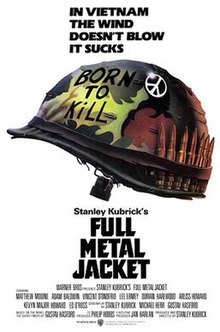
Full Metal Jacket
Narrative conventions of a war movie include being able to associate the soldier with their weapon proficiency (e.g. the sniper, heavy machine gunner, explosives expert) which allows us to easily identify them . There is also that key ethnic stereotype character in the team which the audience could easily identify. There is also the last-minute miracle of reinforcements to pull the heroes out of hell and push back the enemy.

Typical Plot: The movie would normally open up with a battle scene on the war front, then sometime afterwards, we would see what would be happening back at home and take us away from the fight. With this trip back, we would begin to understand a bit more of the plot centering around the troop we will be focusing on in the movie.
Typical Characters: Most often, war films would have males as their main character, considering that the film was based off a real historical war. Back then, it wasn't common to see a woman out on the battlegrounds of war, so war films tend to keep that standard when it comes to previous wars. When coming to modern wars or smaller scale non-militaristic wars, there could possibly be some women in the battles.
Typical Historical Setting: Most war films focused around the two World Wars, or smaller scale historical wars like civil wars or proxy wars. Some war films take place in modern times as well, such as a few in Afghanistan.
Typical Look or Style: War films tend to use gritty, shaky cameras when on the war front. Lighting may be dark and grim, or light and uplifting, depending on the mood of the event (i.e. if the battle is either going well or poor).


Horror
Scream
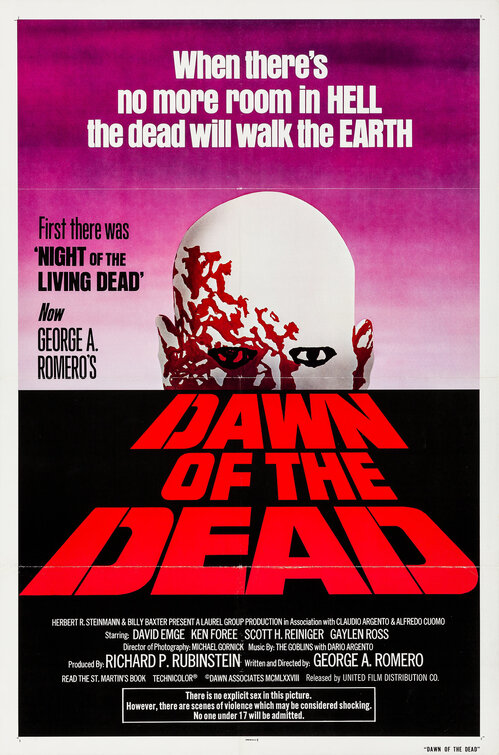
Dawn of the Dead
Haunting In Connecticut
Horror films tend to open with a murder scene of characters irrelevant to the story, or a character that the audience has no care for. This is mainly to help characterize the villain, and what they're capable of and how  they go about taking lives.

Typical Plot: The antagonist of the film tends to be characterized before our protagonist. After their situation has been established, the protagonist tries to survive, or possibly eliminate the antagonist.
Typical Characters: In Horror films, there is often a group of people subject to be victims of the antagonists attacks. Within these groups, females tend to be more feminine and helpless compared to normal women of today. 

Wednesday, January 11, 2012

Writing About Film - Response

1. What are the 5 kinds of film writing described in the article and what are the key details of each?


 In this article, 5 different types of film writing are described. Formal Analysis is a form of film writing where the writer analyzes different components of the film and how they come together and create a central idea or contribute to the film as a whole. Film History writing focuses on the history of a film and its influence on and from history itself. Ideological Papers analyze films that pertain to a central belief or set of beliefs, and how the film goes about portraying these messages. Cultural Studies/National Cinemas discuss the differences between the films of a different culture and how certain trends represent or portray their country or culture in film. Discussion of the Auteur criticizes the ability of how a single person (most often the director) can incorporate his/her own unique vision into a film and cause the finished product to be recognized as a film of a certain auteur's perspective.

2. What does “Annotating a Film Sequence” involve and what are it’s benefits?


Annotating a Film Sequence is when one takes a certain scene from a film and breaks down its components and identify the effect of each component of the film. It also helps explain how each effect contributes to the film as a whole. One would start by taking the scene and labeling each individual shot. Labeling each shot helps keep track of the complex shot sequences, and when reviewed, will uncover possible patterns or certain editing decisions.

3. What does the author imply when she says to “Think Beyond the Frame?”

To "Think Beyond the Frame" is not to think solely about the film, but instead, about what happens behind the scenes and notice the effort and reason into placing certain content within the film to make it its own. Identifying the director and noticing patterns or trends in his work can contribute to a nice film writing assignment. Production history of the film can help one realize what potential a film has given its certain conditions (budget, casting, writing, etc.) If one reads what critics and scholars have to say about the film, it will become easier to make observations because one could narrow down their observation around what the critics or scholars have appreciated or disliked. A film's genre plays a role in helping one identify limitations of the genre, and how certain filmmakers decide to enforce, or stretch these limitations. Lastly, cultural phenomenon can be seen in certain films which helps add to a message or thesis one might have in a piece of film writing.