Thursday, December 19, 2013

Monday, September 16, 2013
Contemporary Media Analysis

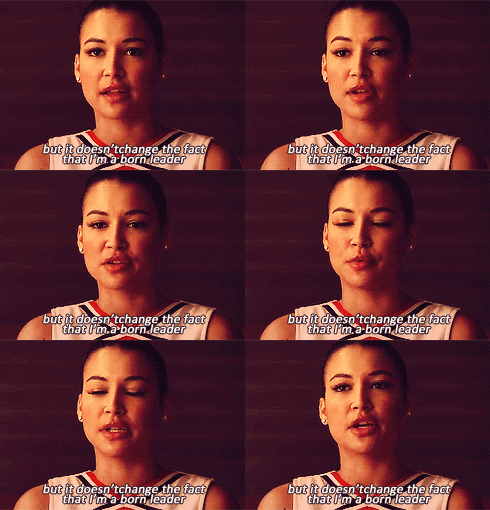 Media is representative of the many aspects of our society today. Media is often used as a vehicle to deliver messages of reality that are often subjective or critical of our society. Revealing critical aspects of our society through media is almost like "cushioning the blow" of the realization of the aspect itself. Media is used to comment on the status and ideology of today. A topic extensively explored was the status of homosexuality in our society. Modern media is slowly progressing to allow these types to become accepted (or at the least, known) in society. Media lets the public know that the issue is there, and with these 'fictional realities' they suggest how they believe the public should react to the issues.

One trend that was repeated through countless presentations was how stereotypes are being broken as our society becomes more modernized. In media we see various amounts of "blurred lines" when it comes to anything representative in our society. We have the blurring of Good vs. Evil, creating the Anti-Hero for example. We even have the stereotypes of man vs woman, and that we can see some very authoritative women and some less "manly" men. These shifts in the social paradigm can represent the growth of our society, as they begin to slowly become more and more progressive in their acceptance of radical ideas.
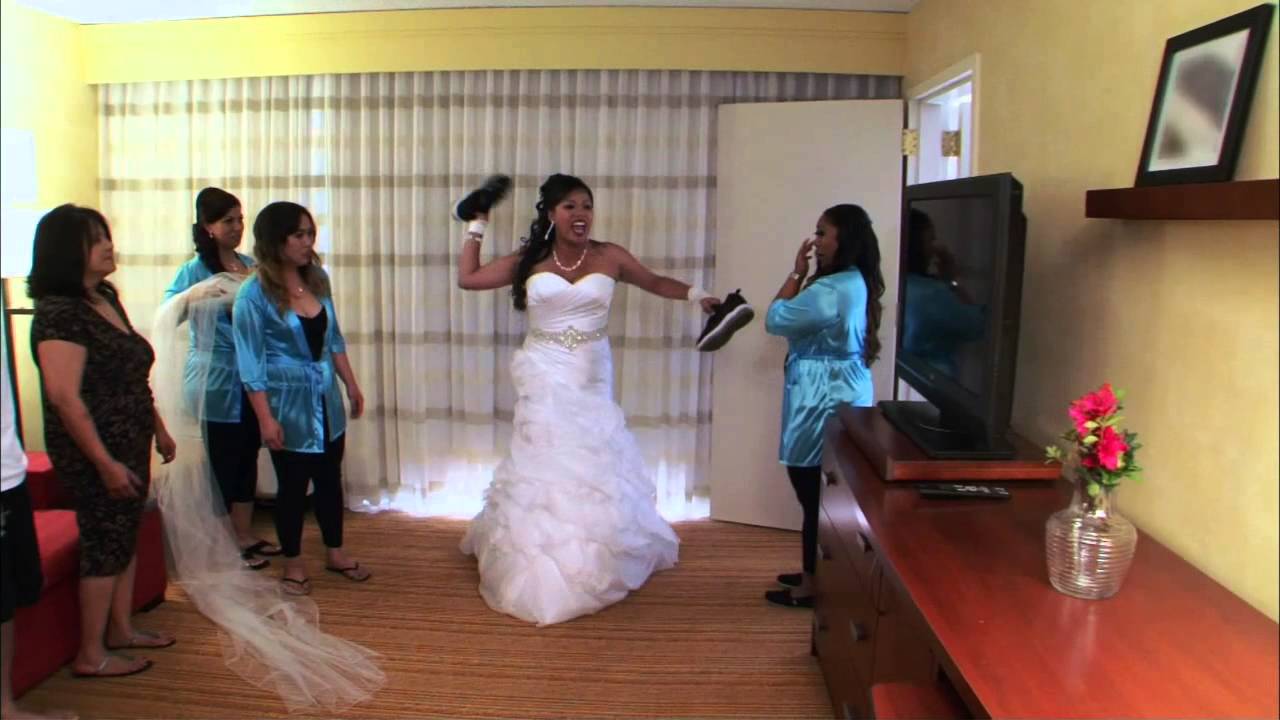
For the best and worst, I like to see this as positive and negative social commentary. Every media project has a message, and it will either highlight or obscure certain aspects of our society. For the negative side of things, I used reality tv series' such as Bridezillas to show how there is a capitalist social ladder still present in our society. Us "middle class" working people find enjoyment in watching the supposed "upper class" go through catastrophic events in what they want to be their "perfect wedding/party/life/etc." By watching these series', however, we're also almost admitting that the lives of others are genuinely more interesting than our own. This negatively reflects the inconspicuous effects that a capitalist economy has on our society. However positive comments can come through the media as well, such as the significance of family values. In shows such as All American Girl and Modern Family, we see the creators and directors glorifying the importance of family values.

Tuesday, August 27, 2013
My Top 5 Films
(in order of longest title to shortest)
 Saving Private Ryan
 is an amazing film by Steven Spielberg and what captures me the most in this movie is its amazing cinematography. From the start, Spielberg pulls you into the midst of a raging battlefield, on the beach of Normandy, France. Although i'm not a big fan of gore, the gory scenes are bearable for me because I became so attached to each of the characters that their death scenes seemed more so emotional rather than violent.
 Spirited Away
Miyazaki is the god of directing animated films. Spirited Away has a story line with an interesting characteristics. It's practically a coming of age film with fantastical creatures and spirits, guiding a young girl on learning to become responsible and make mature decisions. What was more surprising was the social commentary around this film. After some research I discovered this film was actually based off of the controversy among children in prostitution in Japan.
 Ip Man
 is an amazing Chinese kung-fu film centered around one of the world's renowned kung-fu teachers. I'm a sucker for underdog-esque kind of films. In this film, Ip Man was a wealthy kung-fu teacher who was moved to poverty after the Japanese invaded their hometown. He was summoned to fight against a Japanese commander who was a big fan of fighting styles. After Ip Man's friend was beaten to death by this commander, Ip Man is enfuriated and rises up to defeat the commander, in honor of his friends and hometown. The fighting choreography and cinematography grasped the sheer beauty of Ip Man's style of Wing Chun, and kept you rooting for him through the whole film.
Chaos
 I saw this film with my dad on an airplane a few weeks ago, so I may be a bit biased when I placed this here, but it has every aspect of my "What makes a Great Film" post. The story revolves around a rookie detective partnering up with an ex-cop to track down an accomplished bank robber. The film's full of twists and so much action that every scene feels like the climactic point in the film. The sound design was great, every chase scene full of upbeat, intense music. The sound effects made every scene memorable. The tragic bullet that pierced Wesley Snipes echoed through the scene longer than it normally would. This prolonged sound marked the end of a villain's path of destruction. And the lighting, damn it was amazing. There was an entire scene shot in night, in a cabin in the middle of the woods. We had Statham and Snipes walking in and out of shadows, maintaining an eerie mood throughout the scene, keeping me on my toes. Overall, the movie was great and i'm still getting over such a twist ending.

Old Boy
Old Boy is full of twists and shifts that made me sit and wonder about the film for a good 10 minutes after the end. After building a sympathetic connection with a man who sat in a room alone for most of his life, and suddenly released into the world, I found myself turning on him in the end as we see him paying for his actions that he didn't even knew he committed. The antagonist and protagonist is potentially switched by the end of the movie and I didn't know what to think of after. The narrative was so well thought out, I was struck in awe by the end of it. I could watch that movie 3 times over and would notice a new detail or aspect every time.
Friday, August 16, 2013
What makes a great film?
Lord Flores' List of Great Movie Qualities
1. Narrative
Well I know i'm a sucker for those kind of movies with the plot line that just makes you go "woaaaaah" the minute something so intricate clicks in your brain. I mean the 5-act structure makes for a good movie, but a great one can manipulate that structure in a way, revealing things at the right moment to make your brain explode in the best way possible. Even a simple twist at the very end that makes you rethink the entire movie is what gets me going. I know I've seen this like 5 times already and we went over this in class, but The Piano Tuner is a perfect example of a well-thought narrative, as the beginning creates a multitude of questions that get answered in the end.
2. Sound Design
3. Lighting
I wouldn't say that lighting necessarily makes or breaks a film, but when it's incorporated correctly and well-executed, it adds just enough to make me really notice the beauty of a shot. However incorrect lighting such as overexposure and unintentional silhouetting pretty much kills it for me. The educated film student in me is forced to comment on each shot that is just butchered by horrible lighting. Not to self-advertise here, but my last short film "Truth Be Told" had one of its primary focuses on lighting and shadows to establish a mysterious, serious tone. True, it does have its "unglorious" moments when it comes to lighting, but then again we had practically one light to work with, so I would say we did pretty well given our restrictions.
Wednesday, May 29, 2013
End of Year Reflection
For the independent film research, I felt very strong when connecting the research with my film knowledge. I could analyze the shots and angles in cinematography, pacing and effects in editing, and relate it back to an underlying message, given the research had been conducted well. However, that's where I had some struggles. I couldn't develop the large thematic connections well enough, and it was difficult to research blindly with no focus or goal. When I do end up understanding these thematic connections, I have trouble really analyzing heavy text. Especially the long articles with convoluted vocabulary and messages.
I thought I did well on the Oral Presentation. My strengths were being able to create a fluid outline that I could follow easily, so I could flow through the oral. I guess why I was able to do well on this assignment rather than the independent research script was the comparison aspect of the script. With the oral presentation, I just had to delve into analysis written on Psycho. There was more difficulty in analyzing two lesser known films, and trying to be able to connect them. Knowing that next year it will be performed one-on-one with Mr. Bigue, I guess I'll need to practice more to get it down in the first try.
Production. The most tedious, yet most entertaining. There's a sense of pride that I achieve with each new segment, film, or documentary being completed. I was really able to explore into directing and editing this year. Next year I plan to get into more creative cinematography in my projects. What I would really love is to get to work with a DSLR. There are so many trade-offs with switching to any DSLR. There comes up audio syncing issues, and many manual settings that have to be dealt with. However these trade-offs are so worth the filmic quality that comes out of using these. Being a novice with a DSLR, if I do get use one of these next year, I think a good crash course on DSLR do's and don'ts would be great enough to get me started on using them. I'm really looking to invest in one within the next few years anyway.
Independent Research Script Reflection
With the target audience, I imagined the documentary as one of those interesting Netflix documentaries you find late at night that seem so interesting, yet never heard of. Then again, when's the last time any young-adult heard about a documentary being advertised? I know I've only heard about a select few important, interesting, and fairly controversial documentaries but that's about it. I don't think my general argument would have been very appealing to the viewer, so I hoped to convey it in interesting ways, seen through my opener, for example.
Speaking of structure, I used the opener as a sort of hook while establishing the genre of the films i'm focusing on. I made up a mini chase scene while incorporating shots of the other movies into it with similar shots. My downfall did end up being the research, therefore my sources weren't the greatest. They did offer some superficial information, but I couldn't read far enough into the good sources to find the best information for use in my script.
I spent time trying to make the video aspect of the film be just as important as the audio aspect. Knowing that the audio would be simply describing most of the analysis, I tried my best to use the video to support this analysis. On the script, I simply reinforce the analysis with the clips from the movies being analyzed. Aside from the opener, I couldn't think of creative visual shots including the narrator. I planned to juxtapose certain shots to point out their similarities. Also putting up the movie posters visually wouldn't be too bad. I would say with what I have, the video and audio are clearly linked, but obviously incomplete.
I wasn't able to build my analysis enough to relate it back to my research question, being "How do the techniques of crime films reveal the humane qualities within an individual?". This was mainly due to the lack of building analysis, which ultimately stems back to my poor job as a researcher. I made few insightful comparisons. I knew in cinematography I wanted to talk about the use of long shots, belittling the character in a way, posing them as insignificant.
Thursday, May 2, 2013
Brazilian Cinema and City of God
A main ideological topic conveyed in the film is obviously the controversy surrounding violence. When and in what conditions is it acceptable? The film conveys that in the Brazilian slums, violence is the only means of achieving anything. For example, I remember the conversation among the Runts, talking about how they will never move up in rank if they joined the drug trade. Instead they decided that they would want to kill some people to move up in this hoodlum hierarchy.
A blatant historical and political influence is the gang violence in Brazil, as depicted in the film. Surely they may not be a story surrounding a young aspiring photographer who utilized photography as a way out of the slum, but definitely this violence exists and should not be ignored. It's proven especially with the identical television interview with the real life "Knockout Ned", copied shot for shot, line for line, the only difference being the actor portraying Ned.
The Brianair review stated that although being based on a current issue, the film makers "do not provide any political reference points or background-- the 'sixties', the 'seventies' are just chapter headings that don't explain what was going on in Brazilian society that created these slums"
Monday, April 29, 2013
City of God: Cinematic Portrayal of Violence
"If this is His city, what Hell look like?"

"One wants to steal the loot; after all, the youth are only 'niggers and thieves'; the other wants simply to 'exterminate' the men. This dialogue, coupled with the image of the men huddled primitively in the tree branches, calls attention to the way in which they have been dehumanized by the state and by the discourse of the media"
 City of God is a film directed by Fernando Meirelles, and it depicts the troubled lives of those living in the Brazilian favelas, surrounded by gangs, drugs, and incessant violence. The portrayal of violence in City of God is shown through our narrator, Rocket, who is subject to this violence growing up in the favelas of Brazil. Rocket grows up to photograph the horrors of the violence of his city to bring it to the attention of the media. The narrative is very character driven, as Rocket narrates the actions and history of almost every key character in the film. This individual characterization allows the audience to witness the development of each character, building a connection or sympathy that leads the audience to either completely detest every action they make, or exemplify their deaths or tragic outcomes. However, through such intimate characterization, the film manages to completely dehumanize every action of the gang violence, referring to the horrors being carried out by "'niggers and thieves'". This is how Meirelles' directing effectively creates a complex narrative, as the audience starts out with a small personal issue of money and power between a few individuals, and it relates back to a larger scale act of gang violence and drug trade in Brazilian favelas.
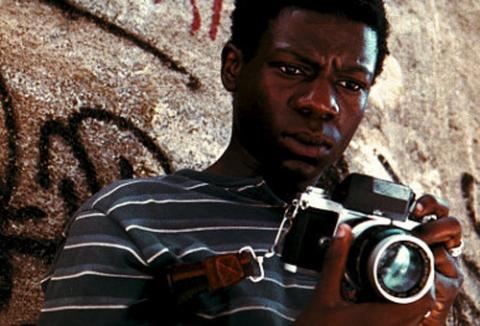
"The favela is on one level a defined space with specific geography, straight rows of houses and repeated locations. On another level, it is a landscape with violent and incomprehensible qualities. In chase sequences, for example, camera angles are repeatedly reversed, confusing direction and space."
The cinematography of the film significantly adds to the chaos and discord resulting from the violence in this film. As stated above, the "camera angles are repeatedly reversed, confusing direction and space". It's camera movements like these that creates that sense of being lost in the favelas. The issue of the whole situation is almost "incomprehensible", especially to those affected by it. Rocket just accepts all the violence and chaos as he grew up with a brother who was a hood. The exposure to the violence is enough to force individuals to accept it.
 “The audience sees bodies falling, or lying on the ground, but the editing is rapid and generally cuts immediately away. The audience doesn't see the blood or tearing of flesh that we assume must accompany events. “
The editing indeed contributes to this sort of dehumanizing violence. The lack of "blood or tearing flesh" is what signifies how the people affected by it accept this violence. It happens so commonly around them there is no need to observe and sympathize with the corpse of the unfortunate. One of the possibly few gruesome death scenes that were emotionally attached were the deaths in the brothel during "The Sixties". It was in this scene that the shot was held particularly long, in order to set the tone of the violence-intensive film that the audience would begin to delve into.
Wednesday, February 13, 2013
Psycho Commentary
Self-Evaluation
20/25
16–20 There is a coherent and detailed analytical evaluative interpretation of the extract, displaying
a good understanding of how meaning is constructed through the use of film language and a
good awareness of the extract’s relationship to the film as a whole. There is a clear
explanation for the selection of the extract. The critique shows a good awareness of the film’s
genre, its place in a broader sociocultural context, and gives a sound analysis of the director’s
intention. There may be brief elements of description but analysis will be thorough.
I gave myself a 20 because my commentary is coherent and somewhat detailed in the analytic perspective. I was able to interpret much of the meaning behind what was in my extract, from the cinematography, to the editing, and role in narrative structure. However I didn't necessarily go in-depth into the different aspects, as they related to director's purpose and intention. There is broad mentioning of sociocultural aspects in Psycho. I also related genre to the historical context of the film's place in time as well, as how Psycho transformed the idea of horror films.
Friday, February 1, 2013
Film Language and Representation
Film Language and Representation
(Only second half of my extract)
The extract I have chosen was the cleanup and hiding of Marion Crane's body and car, which took place after the notorious shower murder (starts at 55:00). The character being focused on in this scene is Norman Bates, as he disposes of Marion's body by storing it in her trunk along with her other belongings. Bates then drives the car to a nearby swamp and sinks it, thus hiding all evidence. This event finalized the end of Marion Crane and how the plot shifts full focus on Norman Bates.
 Anthony Perkins' acting really sells the character of Norman Bates here. At this point in the film (having no prior knowledge) one would believe that Norman's mother is the murderer, and within the first two minutes he plays the role of innocent son defending his mother. The action in which he wraps the shower curtain is executed so cleanly, carefully, and professionally. Even around a minute in, he cautiously checks around as cars pass by, really portraying that innocent and shocked character. No one would have guessed that he's the psychotic antagonist behind this film all along. However, when he reaches the swamp, his character begins to gain that sinister tone behind him. The way he menacingly watches over the sinking car brings forward only dark undertones.
The cinematography of this scene really conveys the shift from innocence to morbidity within the plot of Psycho. With the body-wrapping scene, Hitchcock hides the body itself from our view as it's being wrapped in the shower curtain. If we were to have seen the body, the film would be too gruesome and would be a bit too gruesome too early. However as we reach the swamp again, right after the car is shown sinking, it cuts to a close-up of Norman Bates' sinister face looking down upon the lost evidence. The low angle close-up gives the audience a sense of power within Norman Bates, as he makes the car (and Marion) seem inferior to him.

The editing supports each theme being represented, as pacing and shot selection can be potential factors altering how these themes are conveyed. For example, we see that Tomasini (editor) liked to switch between the shot of Norman's face looking down on the swamp and the car sinking. This constant switch made the scene a little uneasy, as it kept cutting to a previous shot, and as viewers, have to watch the car completely sink (which i'm sure stops at one point then continues).
The lighting within this extract was very powerful in its use of cast shadows seen on Norman's face as he looks upon the car. These shadows drag across half of his face, which conveys a dark, mysterious look. The mystery behind his character pretty much sets up the anticipation for the rest of the film, as we lean toward Bates being the murderer, rather than his mother.
 an unsettling scene, in which the audience tends to only imagine the horror of the corpse that lays in the curtain. The sharp violins re-accompany the bass as Bates loads up the trunk with Marion's belongings. These noises are only a bit soft at this point, however completely goes silent as he's sinking the car. This also unsettles the audience and causes more attention to the expressions of Bates as the car goes down.

The emotional information conveyed gives the audience a sort of glimpse into the mind of Norman Bates. Knowing of Marion Crane's past, and contrasting it with the initial innocence we see with Norman, there is almost a form of sympathy for Norman. I know personally that I didn't feel any remorse for Marion as that car slowly sank to the bottom of the swamp. The mood of this scene is very pivotal to the plot, as Hitchcock slowly transitions the plot focus onto Norman through this scene.
Wednesday, January 30, 2013
Psycho: Socio-Cultural Context
Psycho: Socio-Cultural Context

Alfred Hitchcock's Psycho represents the culture of 20th century America. This film serves more as a representation of the progression of cinema as of the 20th century. The new innovations of this era of film included the introduction to sound and even color films. However with these new innovations came repercussions, seen through issues against censorship. Hitchcock daringly fought against these standards through his use of women's lingerie and even using the first American film scene including a flushing toilet. These actions were very bold at the time, causing quite a shock to the initial audience. However, Hitchcock couldn't beat them all, and chose to do the film in black and white for two reasons. One, the budget was aimed to be under $1 million (turned out to cost $800,000), and two, he made the directorial choice because he believed that Psycho in color would be too gory for American cinema at the time.
Hitchcock was a London-born filmmaker, moved to America. "Relying heavily on what he thought of as his intimate knowledge of the British countryside, cityscape, and audience and character psychology, he nevertheless described himself, with great pride, as an American-trained cinematic artist, brought up on the style and production methods of American filmmaking." Hitchcock declares himself as an American filmmaker, although he could be declared a pioneer in stretching the standards for American cinema, with his knowledge of British filmmaking.
Hitchcock's Psycho was seen as an important forerunner to the "slasher" sub-genre of horror. The film's knife-wielding and mentally disturbed killer, twist ending and 'stalking' camera technique proved influential on films to come.


Monday, January 28, 2013
Psycho: Narrative and the Film Extract
Psycho: Narrative and the Film Extract
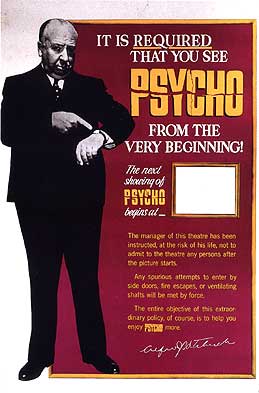
On release, Hitchcock himself sparked an interesting advertising campaign claiming that Psycho could only be seen from the very beginning of the film.
"We won’t allow you to cheat yourself. You must see PSYCHO from the very beginning. Therefore, do not expect to be admitted into the theatre after the start of each performance of the picture. We say no one — and we mean no one — not even the manager’s brother, the President of the United States, or the Queen of England (God bless her)!"
It's obvious this was to preserve the authenticity of the film's convoluted plot structure. Also it highlights Hitchcock's ability to manipulate the minds of the audience through narrative. The film is constructed in some odd 2-part/3-part narrative. The reason I say this is that Hitchcock purposely sets the beginning of the narrative as setup following Marion Crane. The audience is led to believe that the film would follow Ms. Crane and her trying to escape with the money, our MacGuffin at the moment. Her character is played so well that it is believed that Ms. Crane would be the "Psycho". Up until the pivotal shower scene, is when the plot takes a drastic turn. Ms. Crane being missing becomes the new MacGuffin that propels the plot. Over the course of this act structure we see developing traits in Norman Bates as we follow the string of murders.
The narrative is propelled by plot as each event has a cause-and-effect sequence to it. For example, after the private eye is killed, the curiosity and worry of Ms. Crane's boyfriend and sister cause them to head to the sheriff and later on the motel itself. The MacGuffin also propels the story as we follow the money as it leads to the downfall of Marion Crane.
Sunday, January 27, 2013
Psycho: Historical and Institutional Influences
Historical and Institutional Influences in...
Alfred Hitchcock's Psycho
Alfred Hitchcock "did not merely work within a medium but utterly transformed it." Hitchcock is definitely an important figure on the evolution of cinema, and there were certain factors that led him to be the auteur we recognize him as.
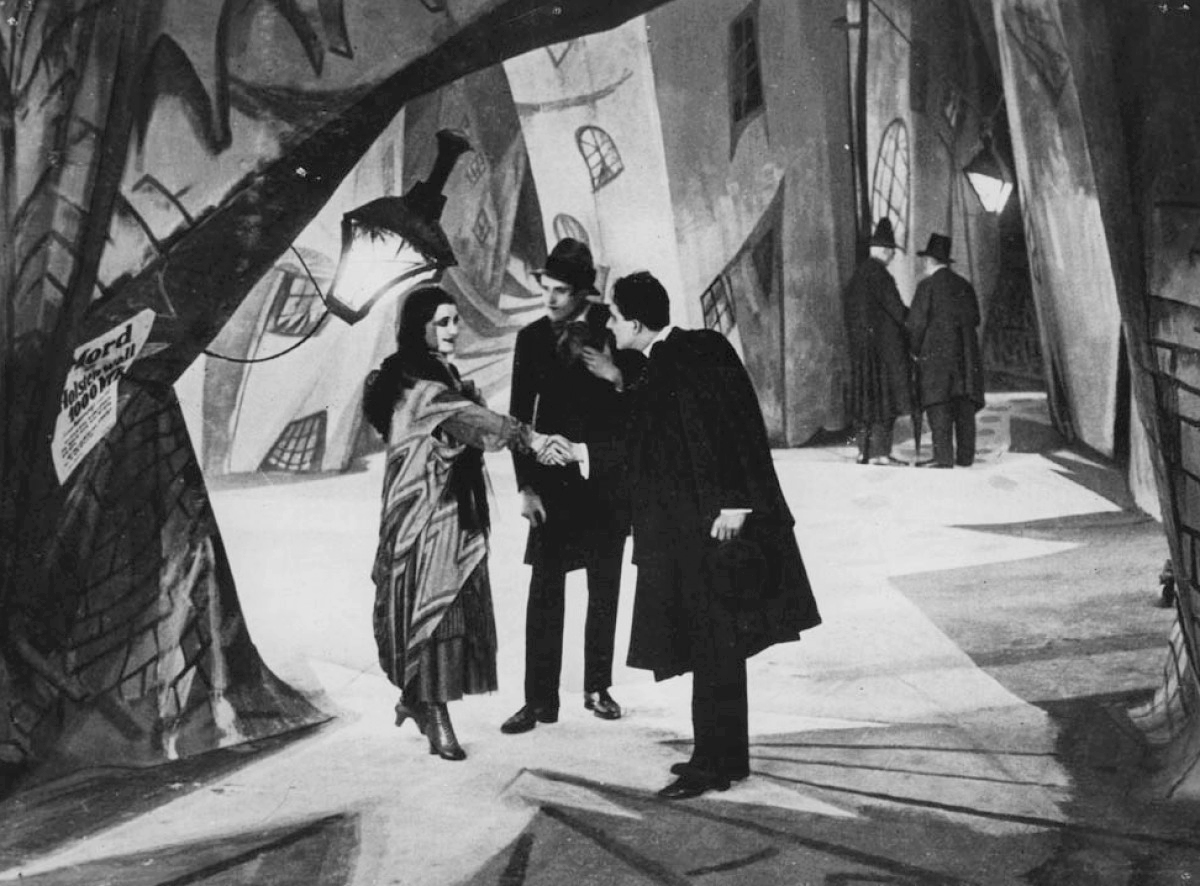
 For one, early in Hitchcock's exposure to cinema, he developed a fancy towards German expressionism on a trip to Germany. As a producer, Hitchcock has developed and adapted German expressionism into his films such as in The Lodger (1972) with the "fascination with heightened emotional states, the imaginative coordination of set design and camerawork, and an almost musical rhythm to the sequence of shots". A second institutional factor rising during the time of Hitchcock's films was the development of sound in cinema. Hitchcock himself despised using dialogue as a safety-net for producing "good films". "He was not adverse to witty dialogue—his scripts were always remarkably literate—but the dialogue itself served as an accompaniment to visual storytelling and not as a substitution for it."
Hitchcock's Psycho was an accurate depiction of time in the 1950s - early 60s. Although the film's plot was unoriginal (as it was based off of Robert Bloch's novel of the same name), it was based off of the story of Ed Gein from Wisconsin. Psycho also broke all film conventions by displaying Marion having a lunchtime affair in her sexy white undergarments in the first scene and killing her a third of the way into the film. Hitchcock also began terming the plot device known as the 'MacGuffin', the thing or device that motivates the characters, or propels the plot and action. As it's used in Psycho, the MacGuffin would be either the sum of $40,000 stolen by Marion, or further on in the film, the murder of Ms. Crane herself.
Wednesday, January 16, 2013
Psycho: Genre and Audience

Alfred Hitchcock's famous Psycho (1960) was a great representation of the film's genre and Hitchcock's style. Psycho was Hitchcock's suspense/horror creation, further noted as a potential psychological thriller. Evidence of this sub-genre exists within the presence of a mentally unstable main character. The abundance of shadows and darkness within the scenes portray a heavy horror theme throughout the film. This low lighting creates fear and anxiety within the viewer. As someone once said, "What we fear most is the unknown"

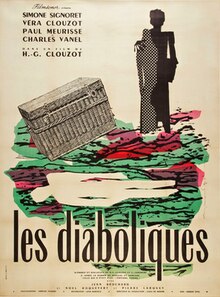
Other works that influenced or connected to Hitchcock's Psycho could include Les Diaboliques (1955) This was another suspense thriller movie that was initially offered to Hitchcock, but ended up in the hands of Henri-Georges Clouzot. It's basically the story of an abused wife who kills her husband, only to be haunted by his reincarnation. This psychological thriller seemed to have many aspects that were incorporated into Hitchcock's Psycho. Hitchcock even decided to shoot the film in black and white, not only to maintain his own self-sufficient budget, but also seen as homage to other pre-Psycho thriller films such as Les Diaboliques, The Night of the Hunter, and Touch of Evil


Hitchcock was the director of this film. However, although Hitchcock was signed with Paramount Studios, Paramount didn't like anything about the story and said that the novel was "too repulsive" and "impossible for films". Hitchcock resorted to funding the movie through his own "Shamley Productions". Hitchcock made this because his previous production was scrapped due to a main actress having to take a maternity leave.
Monday, January 14, 2013
From Silents to Studio' Golden Years
Part 1: Explore how the inclusion of sound in the movie pictures impacted the Movie Industry. Detail how it happened, who was effected, what was lost.
 Sound in the movie industry was definitely revolutionary as it was introduced. Probably could be compared to the 3D of its time. Everybody out there was making sound films. Because of this, the quality of good films began to drop. For example, when only silent films were around, cameras were more mobile and could be carried around more easily. However when sound was introduced, cameras had to be put in refrigerator-like boxes to avoid capturing the sound of film clicking. These boxes hindered the ability to have movies be as mobile as they used to. Many filmmakers decided that the trade-off of sound for film quality was well worth it, but looking back from now, there was definitely need for change.
Part 2: The 20 years between 1930 and 1950 are generally recognized as the studio years. Describe what the pros and cons were of this factory system.
 Studios were large film making organizations dedicated to creating the top films of the era. Among these studios were MGM, Warner Brothers, Paramount, etc. Pros were that the newly incorporated studio system was able to utilize an organized and constant release of new films. However, the studio system wasn't as great as you could imagine. Actors had to work under contract for these studios and were forbidden to work with any other studio. This limited the potential for actors to explore there talents and try a vast range of roles in films.
Tuesday, January 8, 2013
Writing About Film
1. What are the 5 kinds of film writing described in the article and what are the key details of each?
In this article, 5 different types of film writing are described. Formal Analysis is a form of film writing where the writer analyzes different components of the film and how they come together and create a central idea or contribute to the film as a whole. Film History writing focuses on the history of a film and its influence on and from history itself. Ideological Papers analyze films that pertain to a central belief or set of beliefs, and how the film goes about portraying these messages. Cultural Studies/National Cinemas discuss the differences between the films of a different culture and how certain trends represent or portray their country or culture in film. Discussion of the Auteur criticizes the ability of how a single person (most often the director) can incorporate his/her own unique vision into a film and cause the finished product to be recognized as a film of a certain auteur's perspective.
2. What does “Annotating a Film Sequence” involve and what are it’s benefits?
Annotating a Film Sequence is when one takes a certain scene from a film and breaks down its components and identify the effect of each component of the film. It also helps explain how each effect contributes to the film as a whole. One would start by taking the scene and labeling each individual shot. Labeling each shot helps keep track of the complex shot sequences, and when reviewed, will uncover possible patterns or certain editing decisions.
To "Think Beyond the Frame" is not to think solely about the film, but instead, about what happens behind the scenes and notice the effort and reason into placing certain content within the film to make it its own. Identifying the director and noticing patterns or trends in his work can contribute to a nice film writing assignment. Production history of the film can help one realize what potential a film has given its certain conditions (budget, casting, writing, etc.) If one reads what critics and scholars have to say about the film, it will become easier to make observations because one could narrow down their observation around what the critics or scholars have appreciated or disliked. A film's genre plays a role in helping one identify limitations of the genre, and how certain filmmakers decide to enforce, or stretch these limitations. Lastly, cultural phenomenon can be seen in certain films which helps add to a message or thesis one might have in a piece of film writing.
In this article, 5 different types of film writing are described. Formal Analysis is a form of film writing where the writer analyzes different components of the film and how they come together and create a central idea or contribute to the film as a whole. Film History writing focuses on the history of a film and its influence on and from history itself. Ideological Papers analyze films that pertain to a central belief or set of beliefs, and how the film goes about portraying these messages. Cultural Studies/National Cinemas discuss the differences between the films of a different culture and how certain trends represent or portray their country or culture in film. Discussion of the Auteur criticizes the ability of how a single person (most often the director) can incorporate his/her own unique vision into a film and cause the finished product to be recognized as a film of a certain auteur's perspective.
2. What does “Annotating a Film Sequence” involve and what are it’s benefits?
Annotating a Film Sequence is when one takes a certain scene from a film and breaks down its components and identify the effect of each component of the film. It also helps explain how each effect contributes to the film as a whole. One would start by taking the scene and labeling each individual shot. Labeling each shot helps keep track of the complex shot sequences, and when reviewed, will uncover possible patterns or certain editing decisions.
3. What does the author imply when she says to “Think Beyond the Frame?”
Wednesday, December 5, 2012
Wreck-it Ralph Trailer Review

Saw this movie a couple weeks back, but I knew I'd be buying a ticket when my friend linked me to a trailer months before the release. Loved the movie, so I thought I'd look a little more into this trailer which sold me long ago.
 The narrative conveyed in this trailer surprised me now after giving it a second look. It opens with a voice-over, which I thought was outside of the film itself, and placed for the sake of the trailer. It soon reveals that the voice-over was actual dialogue from a scene within the film. The purpose of the voice over was to give some backstory into the film, introducing a character and his conflict. Simple as that.

The mis en scene of the film amazed me, as I was when I saw the film. There's one shot of Game Central Station, which shows all the tiny characters walking around. Some could even be made out to be references to some popular existing games. The finer details of this shot makes it even more intriguing to watch. The depth of the shot makes the station seem almost endless, which in correlation could make the viewer assume the film itself has endless amounts of entertainment.

The cinematography was interesting as well, with well executed close-ups for characterization of Ralph and other main characters. I saw some quick pans that were used to transition between two shots. One part that I liked in particular was the whole first-person scene in Hero's Duty. It immerses the viewer into the game with a standard first-person shooter display. The viewer sees much of the action, with little comedic parts of Ralph running around for his life.

For the edit of this trailer, I realized the use of titles was effective to moving along the trailer narrative. Although there was no signature "movie trailer voice", you could already hear it in the back of your head anyway. The pacing of the shots increased when "Some Nights" by Fun. started playing. It was if the trailer provided coverage of the film's story line, while also building on the characterization of Ralph.
Speaking of soundtrack, the sound design of the trailer was significant as well. First off, the trailer is made of dialogue taken from the film itself, there was no external voice-overs or anything like that. It was the choice of dialogue that made an impact on the trailer. Each section of dialogue further characterized whomever spoke it. As we got deeper into the trailer, the dialogue became more revealing and left you with just enough knowledge about the film to understand it, yet not enough to want to know more. Then near the end, the soundtrack led to an increase in shot pacing, and made it feel almost like a montage of content. The choice of music was interesting and represented that "wanting to be someone else" kind of feeling.

Wednesday, November 28, 2012
Documentary Pitch
Purpose: make people aware of a SF-run organization named “United Playaz” and how it reaches to troubled youth in order to strengthen their self-confidence and also strives to teach young adults how to make smart decisions in violent situations.
Contacts:
Misha Olivas - (415) 573-5138
main building - (888) 975-2929
misha@unitedplayaz.org
Rudy Corpus - (415) 573 6219
Interview Questions:
workers/leaders/supervisors:
Can you tell us about yourself?
Where is United Playaz located? (background of neighborhood filled with deliquants)
What is United Playaz and what does it offer in terms of opportunities/aid to kids?
What inspired you to join/be a part of United Playaz? (what are your contributions?)
What is your role in running United Playaz?
How has United Playaz changed people’s lives? Has it changed you?
What do you have to say about children going through rough times right now?
Personal stories you’d like to share?
***ask to take us around places of the building/streets. showcasing historical significance or location of some of the areas.
--------------------------------------------------------------------------------------------------------
teens/adults/parents:
History of life before outreach programs such as United Playaz?
What does United Playaz mean to you?
What have the people here done for you?
How does it affect the community? Are you glad United Playaz exists?
Shot List- What images do I need to make the visual part of the story work? Interviews use mostly Close-ups, Waist shots, and B-roll. Background should also be considered. Usually at least 5 to 10 different shots are combined for a sophisticated piece.
Interviews - MCU/CU/MS (depending on space)
Opening:
LS of cars
ELS of citizens
LS Crane/Tilt-Pan of United Playaz building
Handheld walkthrough of building (sped up)
B-Roll
LS Kids playing around or whatever
MS Workers interacting with children/at desk
CU of back of t-shirt “It takes the hood to save the hood”
General Flow:
beginning - shots of streets of San Francisco. Police Cars. Homeless. Stores. Streets with Graffiti. Cars buzzing by and children waiting or standing on the block. Voice-over of one of the employees explaining where United Playaz is located. Explaining the crime and bad influences of the city life on people. Hip-hop track? Then transition to what UP strives for and goals. Middle - interviews with UP employees/kids.
Shots of the places around the SF including inside of UP.
personal tour of the streets along with one of the creators of UP.
B-ROLL.
Ending - The main director of the group speaking positively about their work towards improving the lives of children. Personal statement that is inspiring and motivational. Ending shot of the crew helping children or just them having fun with the children, or a child holding up a sign of United Playaz. Oh or maybe a still positioned camera that switches between all the individuals who are in UP. ideasideasideas.
Scripts: This is the written portion of your piece that is included either for the broadcast script or for a voice over that pulls the different interviews together.
Intro: (voice over) short spiel over how rugged and how looming the streets of SF can be. talk about the influence of gangs and police activity in the street and how United Playaz is stationed. desired to help the youth and prevent a life of wrong choices.
Closing: (voice over) over all the shots of UP workers helping people or forming strong relationships with one another and their guests.
Monday, November 26, 2012
Known Universe: Alien Contact - Review
Known Universe: Alien Contact
Aliens. A question that has been among the minds of many for many years. Are we alone? Does alien life really exist within our galaxy? This documentary effectively demonstrates the possibilities of discovering alien life and the efforts mankind has taken to make it happen.
This material within this National Geographic documentary was used effectively to attract and interest the audience. After a quick display of flashy b-roll, this documentary starts with a voice-over that introduces the audience to a narrator. This voice-over uses a hook to attract the audience, while also providing a bit of backstory to the purpose of the documentary. The narrator proposes the question about whether we are alone or not in space. It even samples a bit of the interview, and this sampling hooks the audience, as they are curious to know the responses from a scientist's perspective.
For the interviews themselves, they seemed a bit cliche, but well executed nonetheless. Interviews in this documentary were filmed at a standard medium shot from the waist up. Nothing too fancy or artsy, but the visual attraction came from the background, not the interviewees. The background of most of the interview pieces comprised of either still frames or animated images of something relevant to what is being said. On other interview pieces the background consists of a static yet convoluted setup of scientific gear and gadgets. This vague confusing scientific equipment catches the viewers eye and interests them.


Although visuals are interesting, the sound design in the documentary deserves much credit as well. As I watched this myself, I noticed that the volume of the soundtrack increased as the narrator was making summaries of his final points. This happens right before the documentary goes to a commercial break, and then brings up a new point when resuming.
As for the soundtrack itself, I found it entirely fascinating. The score is comprised of fast-paced, epic, and adrenaline-pumping drum beats, accompanied by a smooth, slowly rising orchestral section. As ironic as it sounds, it works well. See 28:00 for reference. This type of music is used when either summarizing a point or introducing a new one. This method typically keeps the viewer interested as the narrator finalizes an idea and proceeds onto a new one. As for what goes in between these pieces, the sound takes a kind of subtle, eerie tone, when describing the vague unknowns of life in space. The score accompanying this documentary was definitely outstanding.
Outside of the voice-overs and interviews, the documentary takes the interview even further, by placing the audience in an actual situation. For example, when the documentary introduces the vertical gun, instead of giving an interview about the experiment and supplying animated still images or small video clips of the test, the filmmaker goes on-site and records almost all instances in where the experiment is being executed. He films the setup of the gun, the reactions of the scientists, and even the moment of truth when the bullet hits the sand. This sort of interaction is what makes a documentary a good documentary, and that it makes good efforts to keep the viewer interested and amazed.


Overall, I was certainly interested in this documentary and it definitely did not disappoint. Being past midnight, I amazingly found myself still awake at the end of the documentary. The visuals were astounding, and it even managed to make still-frame images look amazing. The interviews were great, very coherent. The score was simply fantastic and the design on the placement and manipulation of audio was definitely captivating. Lastly, there was much viewer interaction with the documentary, which kept me intrigued throughout the entire documentary. It's great, 5/5


Overall, I was certainly interested in this documentary and it definitely did not disappoint. Being past midnight, I amazingly found myself still awake at the end of the documentary. The visuals were astounding, and it even managed to make still-frame images look amazing. The interviews were great, very coherent. The score was simply fantastic and the design on the placement and manipulation of audio was definitely captivating. Lastly, there was much viewer interaction with the documentary, which kept me intrigued throughout the entire documentary. It's great, 5/5
Tuesday, October 9, 2012
"The Man With a Movie Camera" VS "Bicycle Thief"
"The Man With a Movie Camera" VS "Bicycle Thief"
Comparing and Contrasting the elements of Realism VS Formalism
Compare
Realism and Formalism were both revolutionary film editing styles in their time. However being both revolutionary, there is little to compare between the two. Bazin states that film should encompass a wide variety of perspectives and forms of story telling. These two films were criticized for using such strange concepts of editing. They both utilized more of an open ended method to convey story. Most of it was based on the audience's perception of the film and how they saw the story being portrayed.
Contrasting
The Man With a Movie Camera
This formalist film is definitely on the other side of the spectrum from Bicycle Thief. The Man With a Movie Camera had quick cuts, no more than 1-2 seconds, and used a lot of juxtaposition of shots for the audience to formulate their own meaning behind the film. At first we'd see the life of rich aristocrats, then the following shot would be of a man stuck in poverty and starvation. This deep purpose behind this form of editing is that each shot would convey a different point on its own, and would compile to a deeper, more common meaning in the film as a whole. This compilation of contrasting ideas to formulate a common theme is what portrays Formalism as a crazy and chaotic form of editing.
Bicycle Thief
This film was evidently leaning toward the side of Realism, for it had long-lasting shots that had very emotional impacts on the viewer. We see long shots of this man, and then of a boy on a curb. The audience can infer that the boy is his son, through the parental feeling or vibe that the man gives off. We see very effective use of the Kuleshov effect. We see the man's face, a large collection of bikes, his son, bikers, and through this the audience can deduct that he's uncomfortable and torn between setting a good example for his son and his intense urge of stealing a bicycle. This film could be classified as realism in the sense that it is filmed and edited in a vary realistic and natural sense. The cuts are used to show a change in action or emotion and it flows so well with the film that the audience accepts it as normal. There were no surprises in the cuts, unlike in The Man With a Movie Camera.
Subscribe to:
Posts (Atom)